APS highlights Thevamaran Publication
The American Physical Society highlights UW Madison Prof. Thevamaran’s recent paper
https://physics.aps.org/articles/v19/129
The FOCUS article written by Deputy Editor Michael Schirber notes:
“The material is also uniquely insensitive to deformation rate, behaving the same under fast and slow compressions. The researchers found that this combination of memory and rate-independence leads to an unusual property: The material’s response to mechanical shocks can be adjusted by appropriately compressing it before the shock. They imagine using this foam in “smart” helmets that reduce injury risk by controlling the propagation of impact energy.”
The research paper, was published in Physical Review X in September 2026
Abstract:
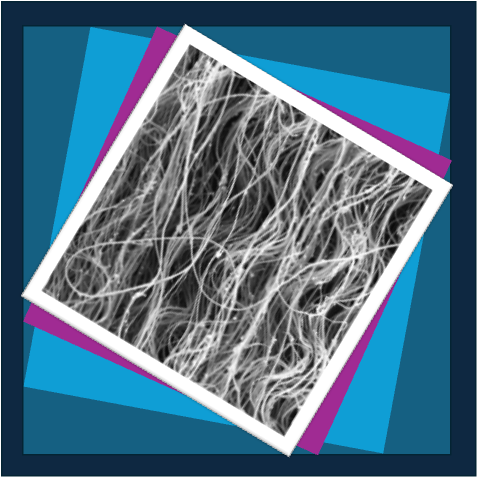
Mechanical memory and computing are gaining significant traction as potential means to complement traditional electronics for robust and energy efficient performance in extreme environments. However, progress has largely focused on bistable metamaterials, while traditional constitutive memory phenomena have been largely overlooked—primarily due to the absence of compelling experimental demonstrations in elastically recoverable materials. Here, we report constitutive return point memory (RPM) in elastically recoverable, vertically aligned carbon nanotube (VACNT) foams, analogous to magnetic hysteresis-based RPM utilized in hard drives. Unlike viscoelastic fading memory, VACNTs exhibit nonvolatile memory arising from rate-independent nanoscale friction. We find that the interplay between RPM and frictional dissipation enables independent tunability of the VACNTs’ dynamic modulus, allowing for both on-demand softening and stiffening. We leverage this property to experimentally demonstrate tunable wave speed in a VACNT array with elastic interlayers, paving the way for novel shock limiters, elastodynamic lensing, and wave-based analog mechanical computing.
Full text can be found here: DOI: https://doi.org/10.1103/n723-s2t6
Citation:
Gupta, A., Maheswaran, B., Jaegersberg, N., Chawla, K., & Thevamaran, R. (2026). Enduring mechanical memory from the constitutive response of elastically recoverable nanostructured materials. Physical Review X, 16(3), 031073.